Djanet, Gateway to the Desert
Between oasis, dunes and plateaus, explore a unique territory in the heart of the Sahara.
Djanet, in the Heart of the Sahara
Mohamed’s hometown, Djanet is much more than a simple starting point: it is a true gateway to the desert.
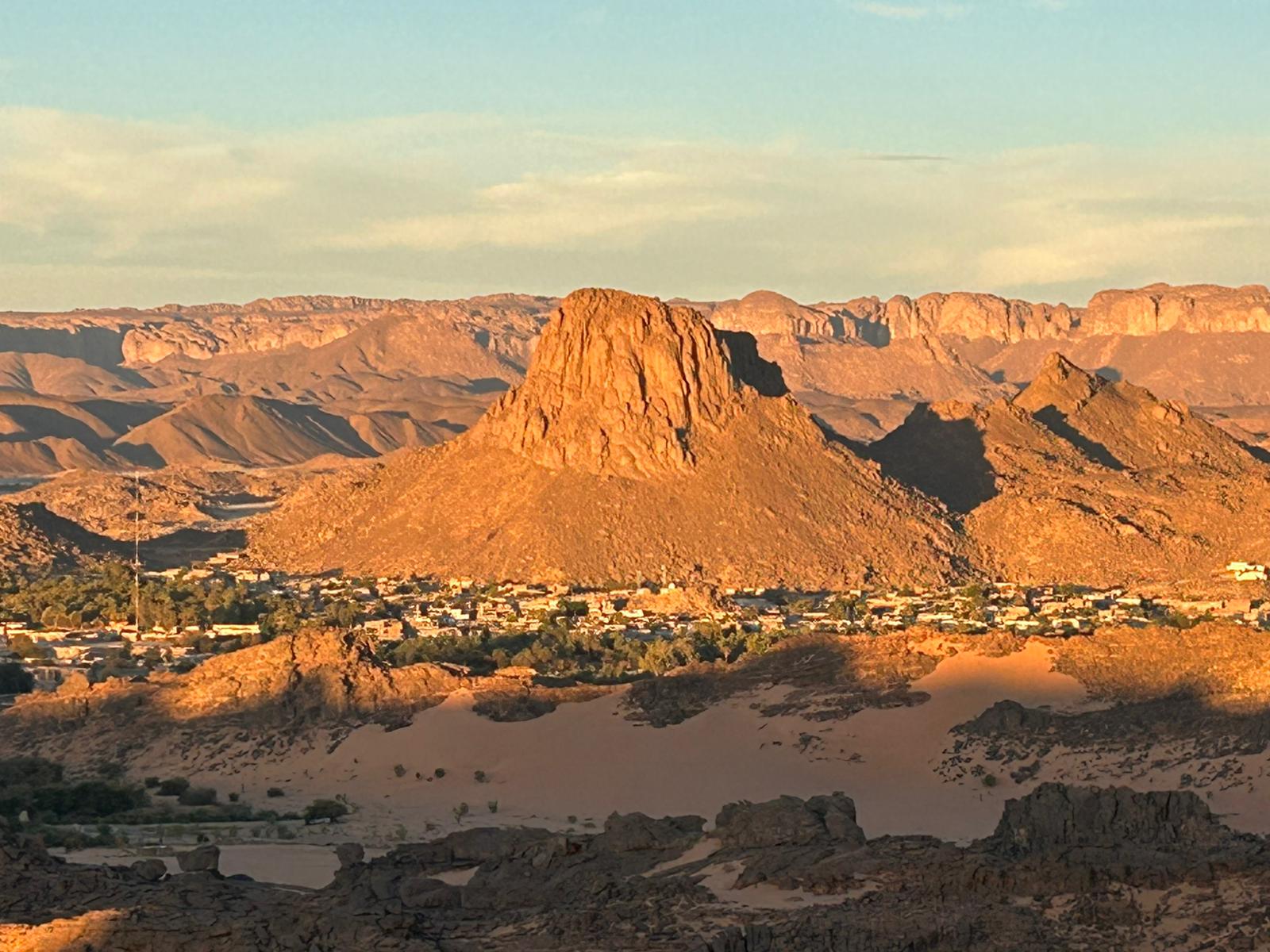
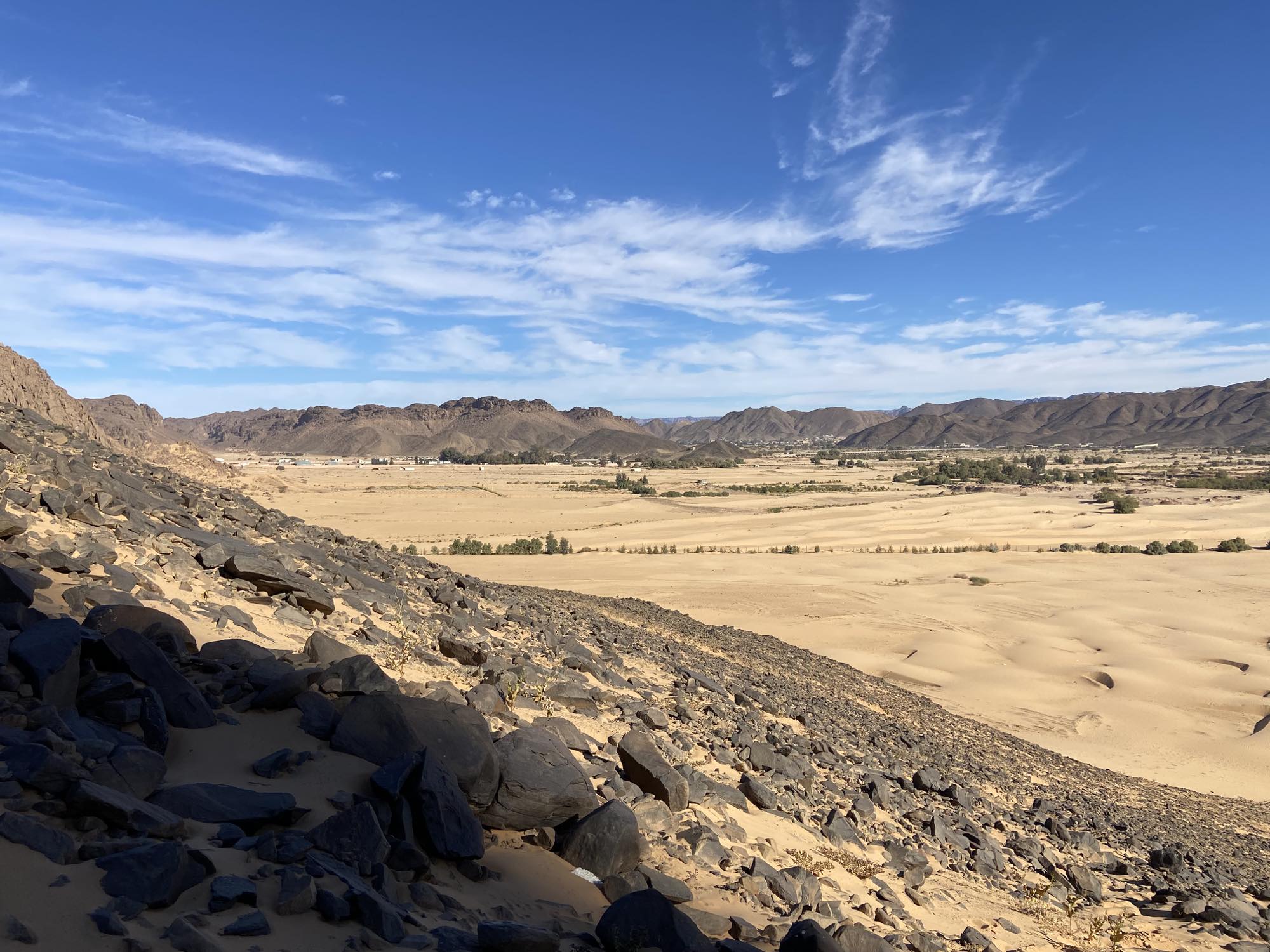
Located in the extreme southeast of Algeria, 1,600 km from Algiers and 100 km from the Libyan border, it is the capital of the Tassili n’Ajjer. At an altitude of 1,050 meters, it lies east of the Erg Admer, northwest of the Tadrart Rouge and at the foot of the Tassili plateau.
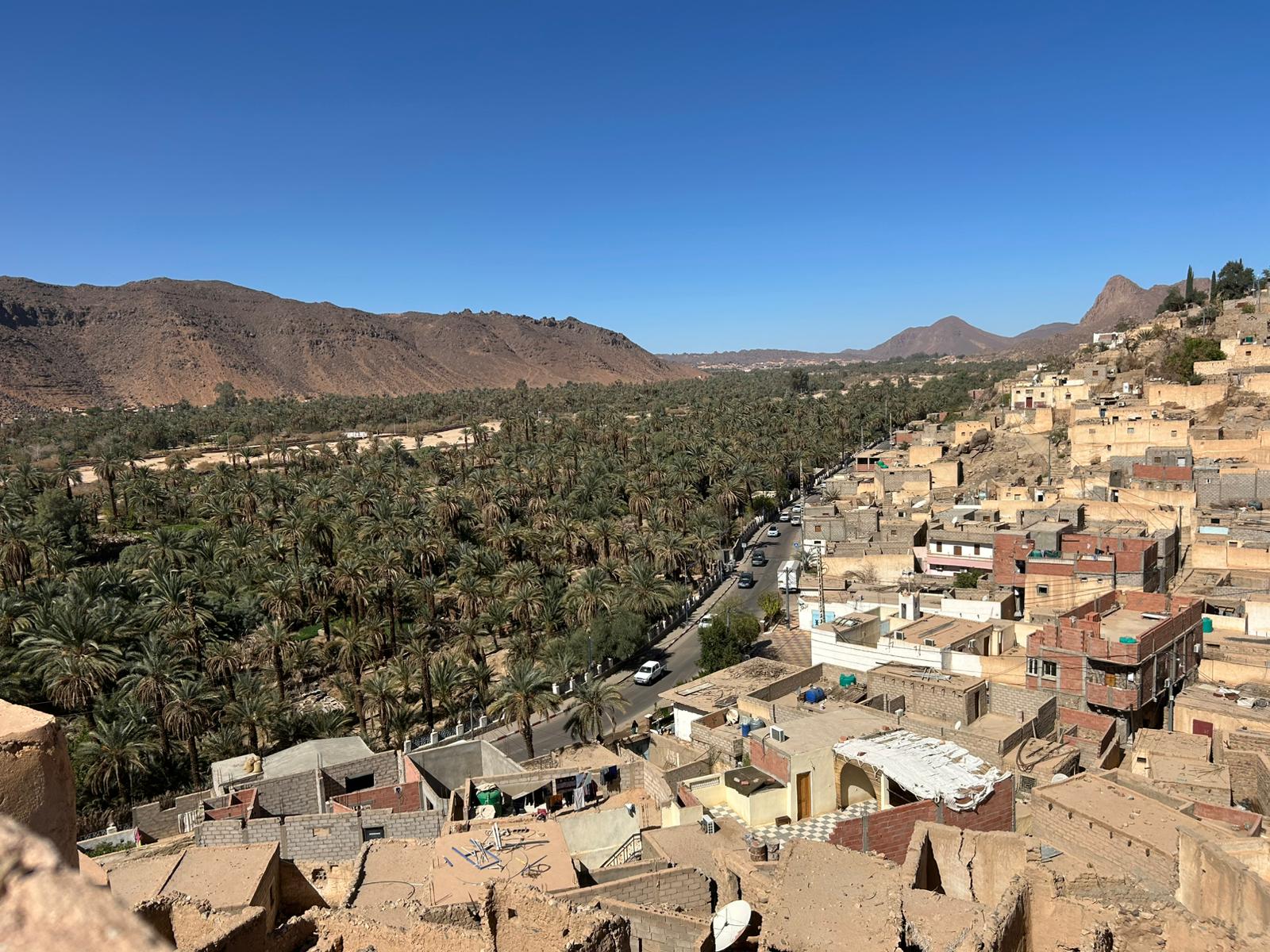
It is from this oasis, with its 30,000 palm trees and numerous gardens, that the adventure begins — where the thousand-year-old hospitality of the Tuareg people meets the majesty of the desert sands.
A Living Craftsmanship
Djanet is also renowned for the richness of its craftsmanship. Silverwork, leatherwork, wood carving and wool weaving are part of a know-how passed down from generation to generation.
The central market is full of treasures: pottery, carpets, colorful fabrics, leather goods and traditional jewelry.
These traditions, still alive today, reflect the deep connection between Tuareg culture and its environment.
A Diversity of Landscapes
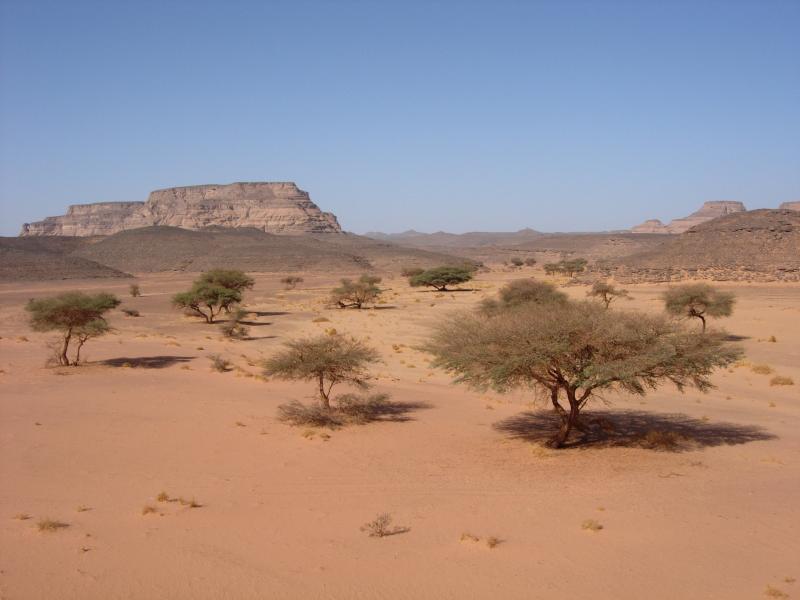
Djanet offers a great variety of landscapes where every element tells a story. Between lush oases, palm groves, sand dunes, caves, springs and gueltas, life has adapted to the harsh conditions of the Sahara for thousands of years.
A City Steeped in History
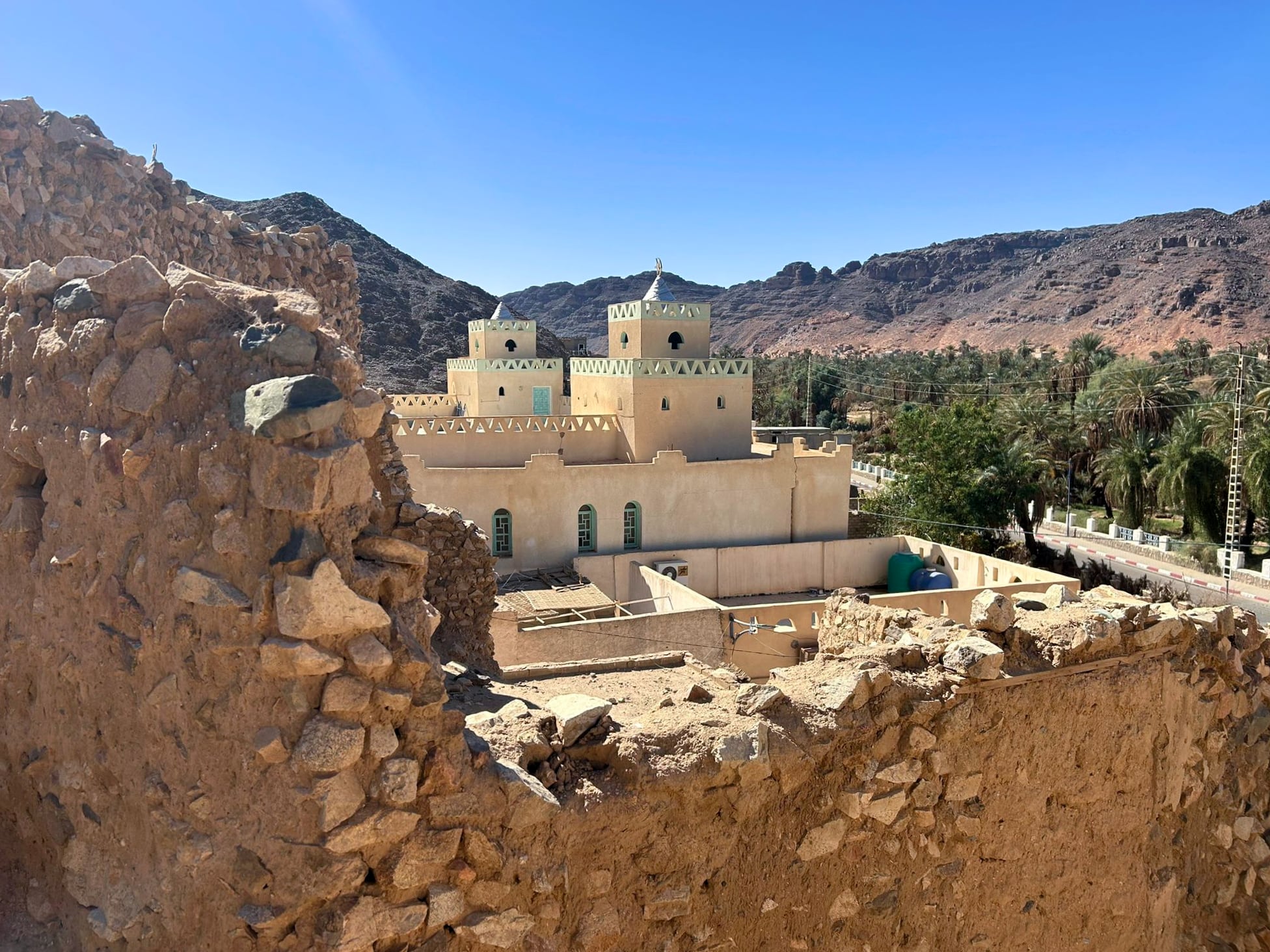
As you explore Djanet, you discover traces of an ancient past. The old ksars perched above the palm grove bear witness to a unique architectural know-how.
The National Park Museum located in the city center gathers numerous objects and explores various themes related to desert life.
EAST
The Tassili, Between Nature and Memory
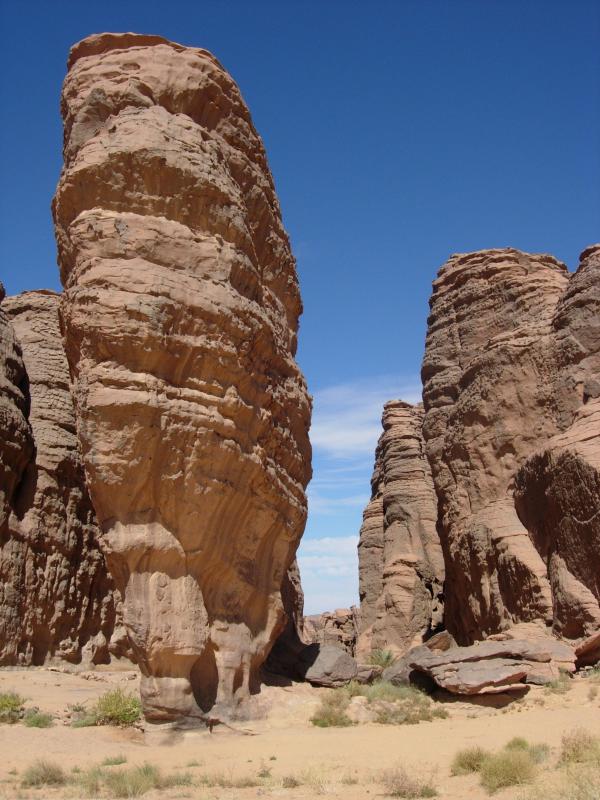
East of Djanet stretches the Tassili n’Ajjer, a natural park listed as a UNESCO World Heritage Site.
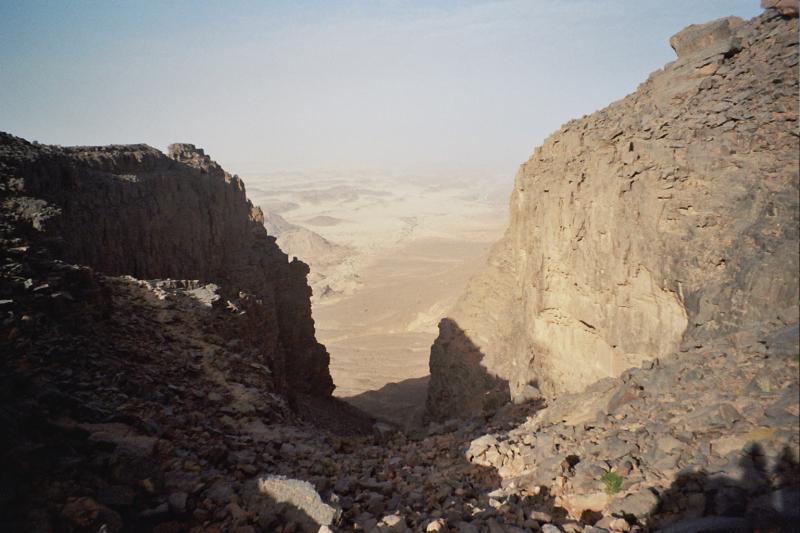
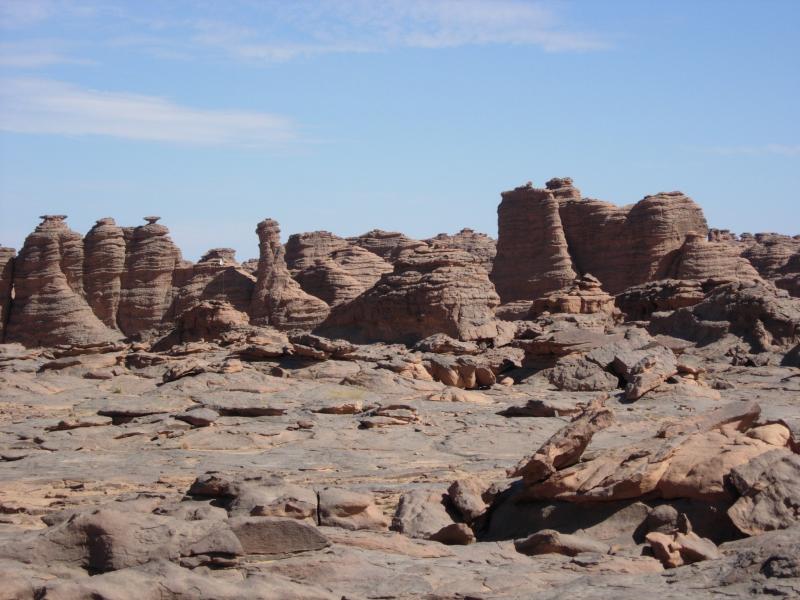
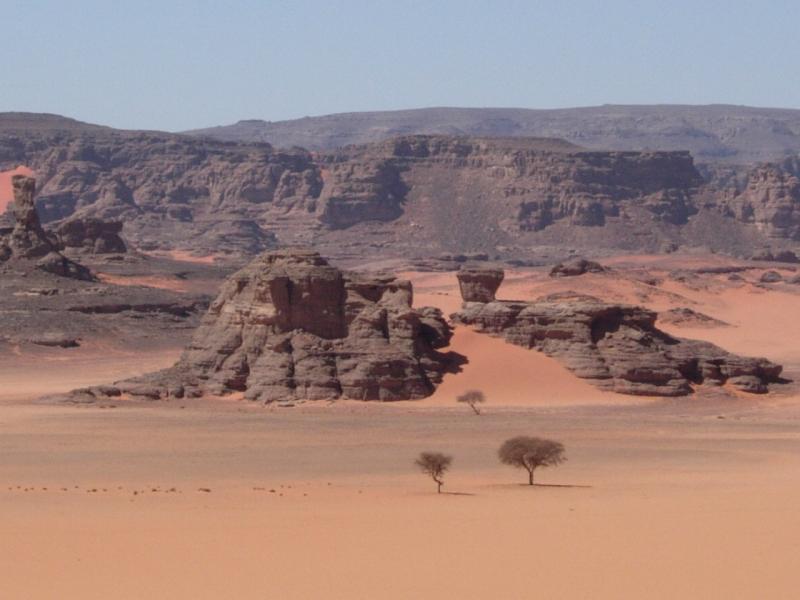
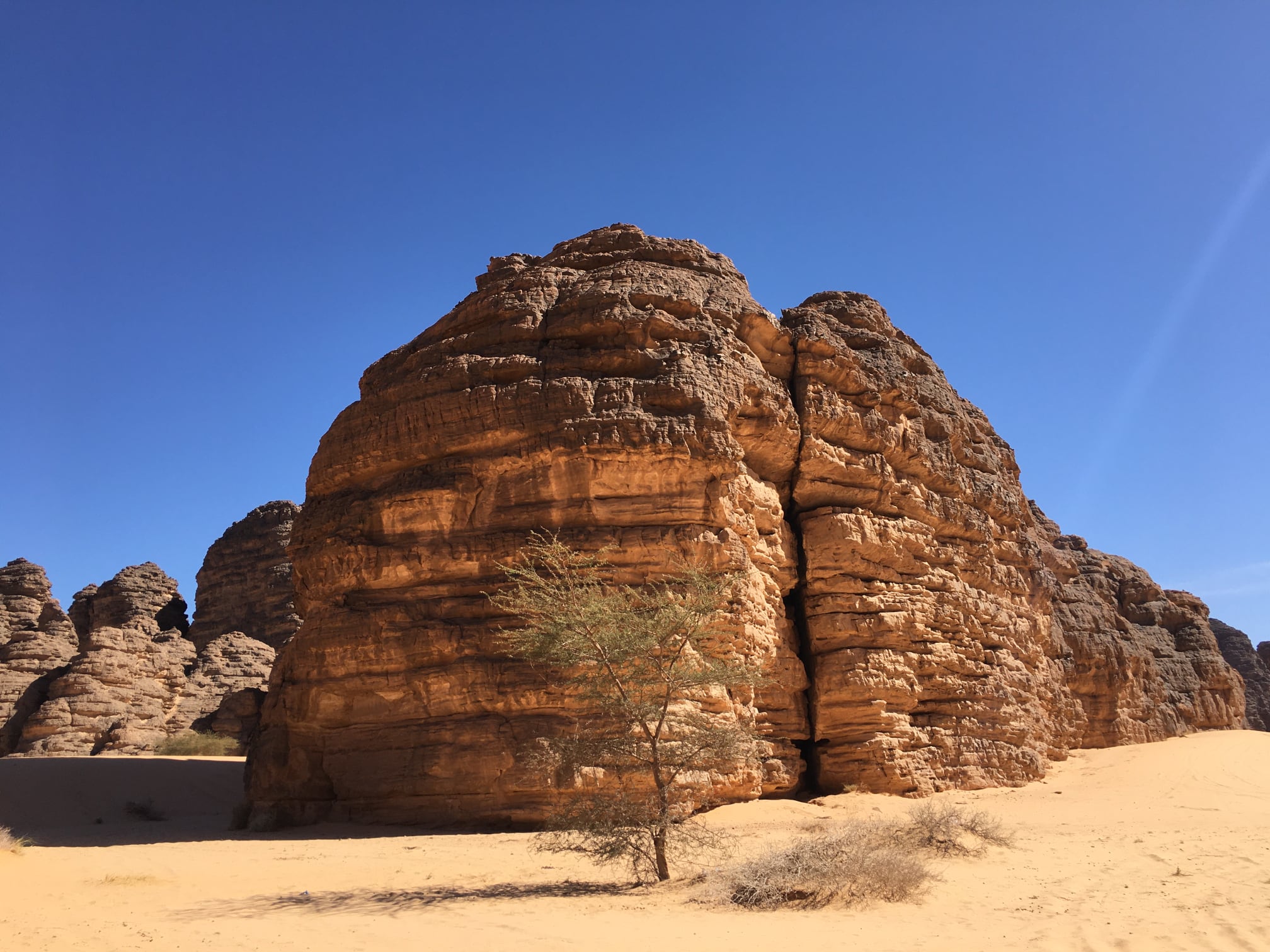
This immense sandstone plateau sculpted by time reveals spectacular landscapes of rock formations, canyons and astonishing reliefs.
A Unique Ecosystem
Despite the aridity, the Tassili shelters a fragile and precious environment. Its reliefs protect areas where life has adapted to extreme conditions, making this region a remarkable natural reserve.
A Memory of the Sahara
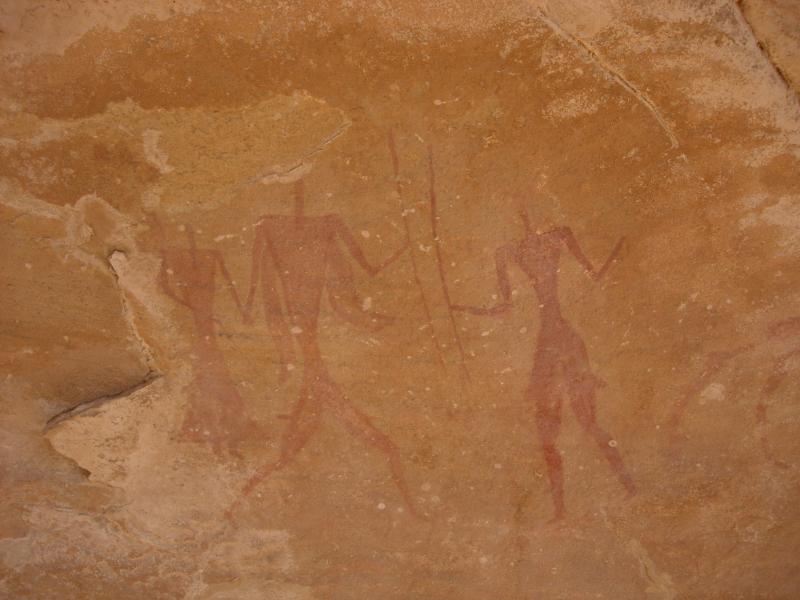
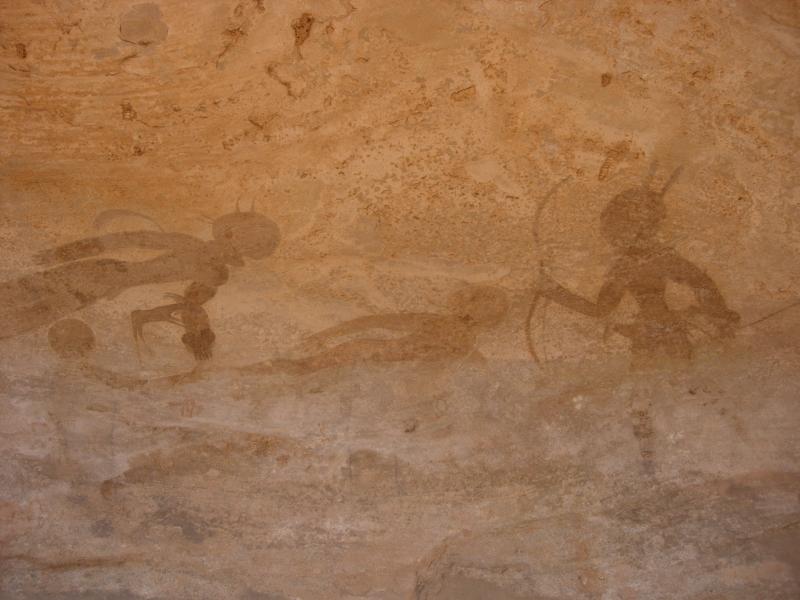
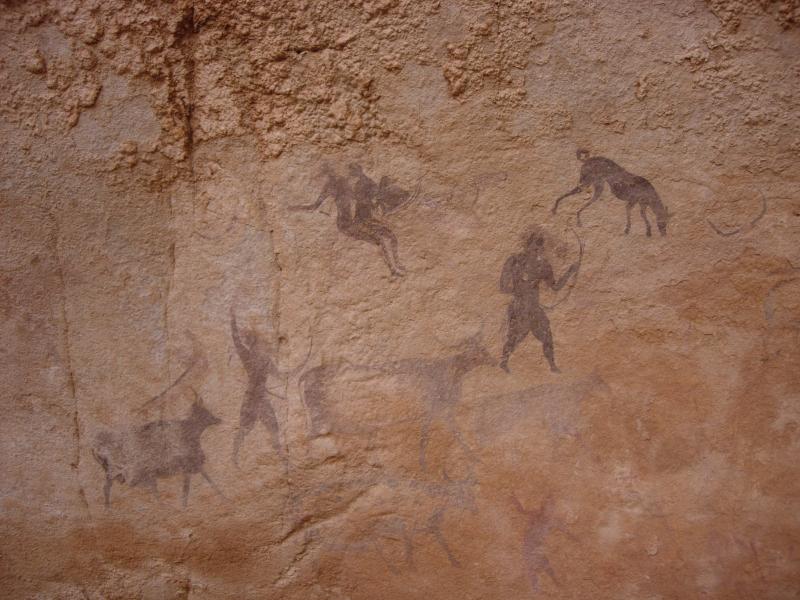
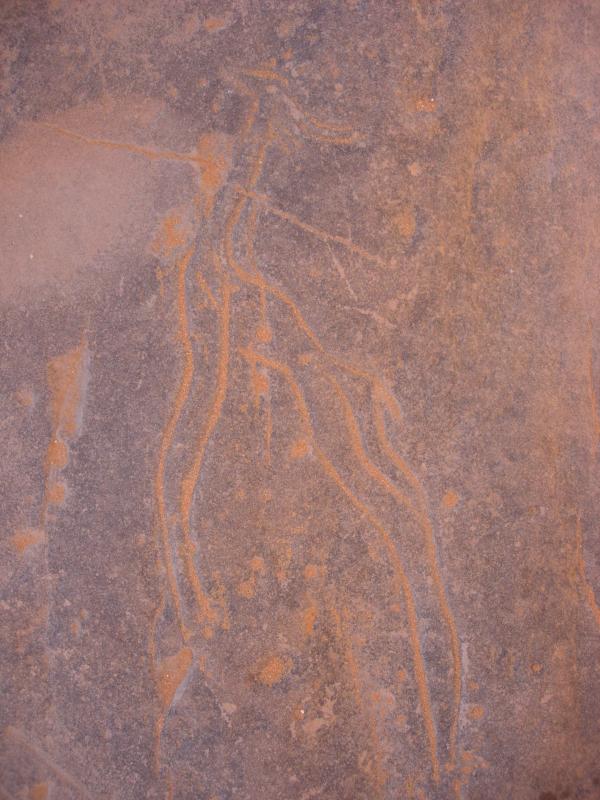
The Tassili is a true open-air museum with more than 5,000 prehistoric engravings and paintings dating back to the Neolithic period. These artworks tell the story of the first Saharan populations and represent a unique testimony to human history.
SOUTH
The Tadrart, a Spectacular Desert
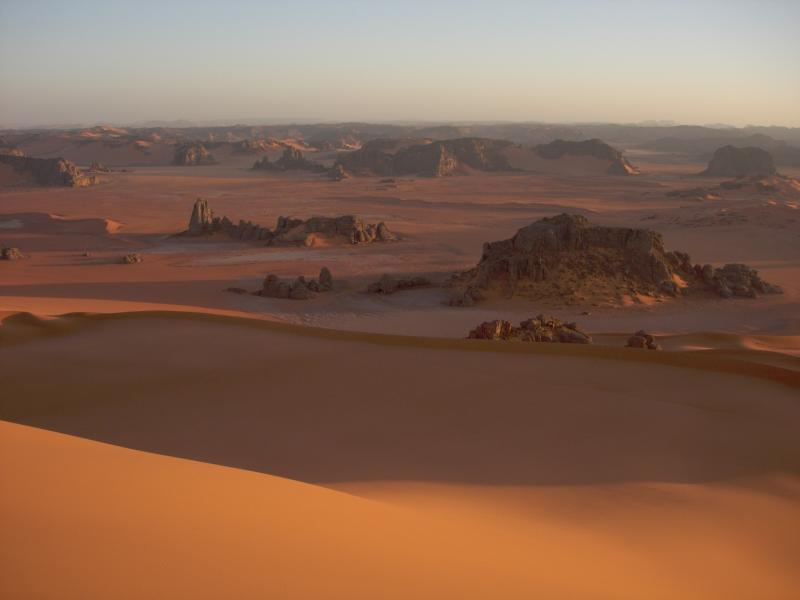
Southeast of Djanet, the Tadrart Rouge region unveils some of the most breathtaking landscapes in the Sahara.
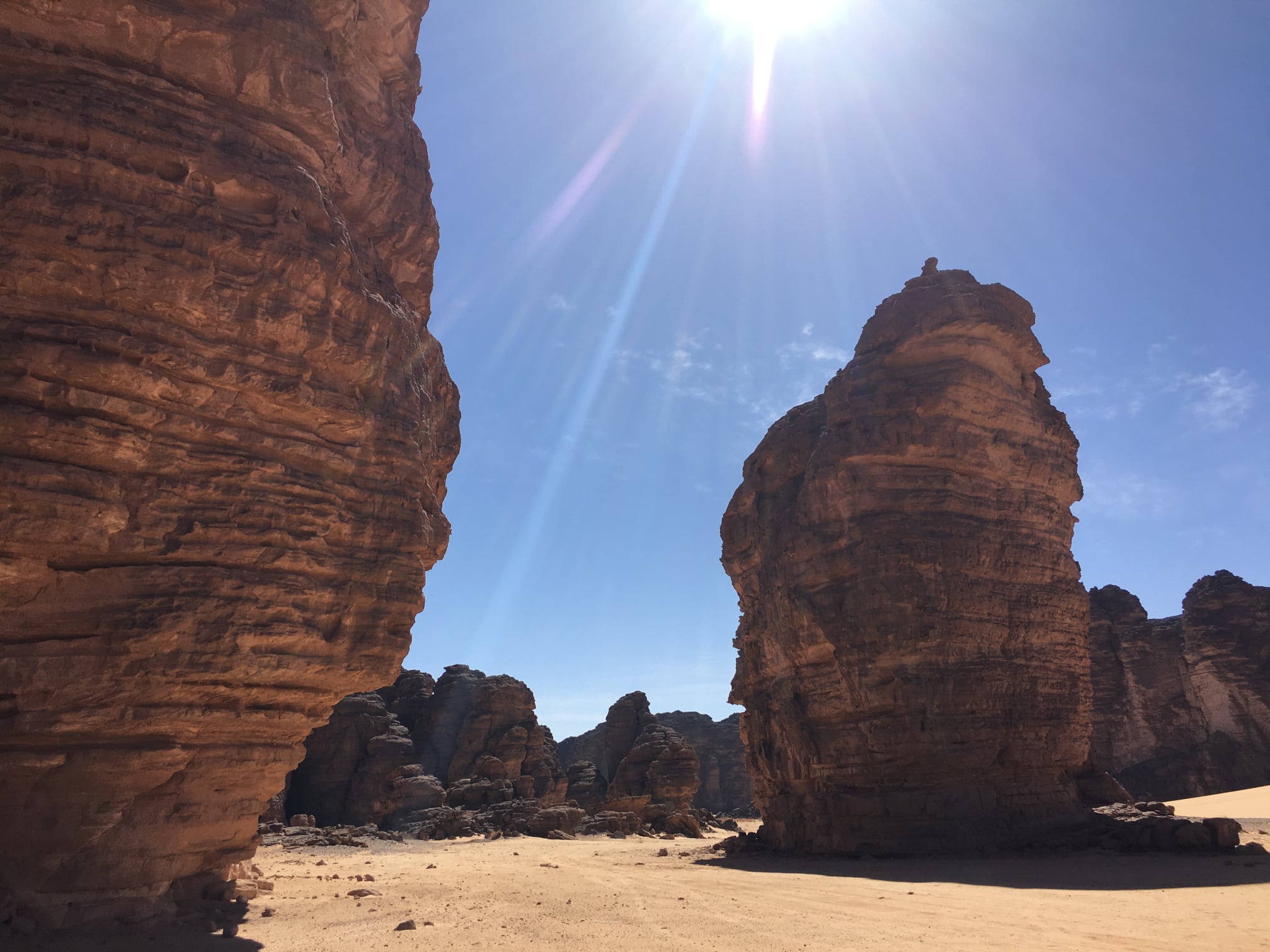
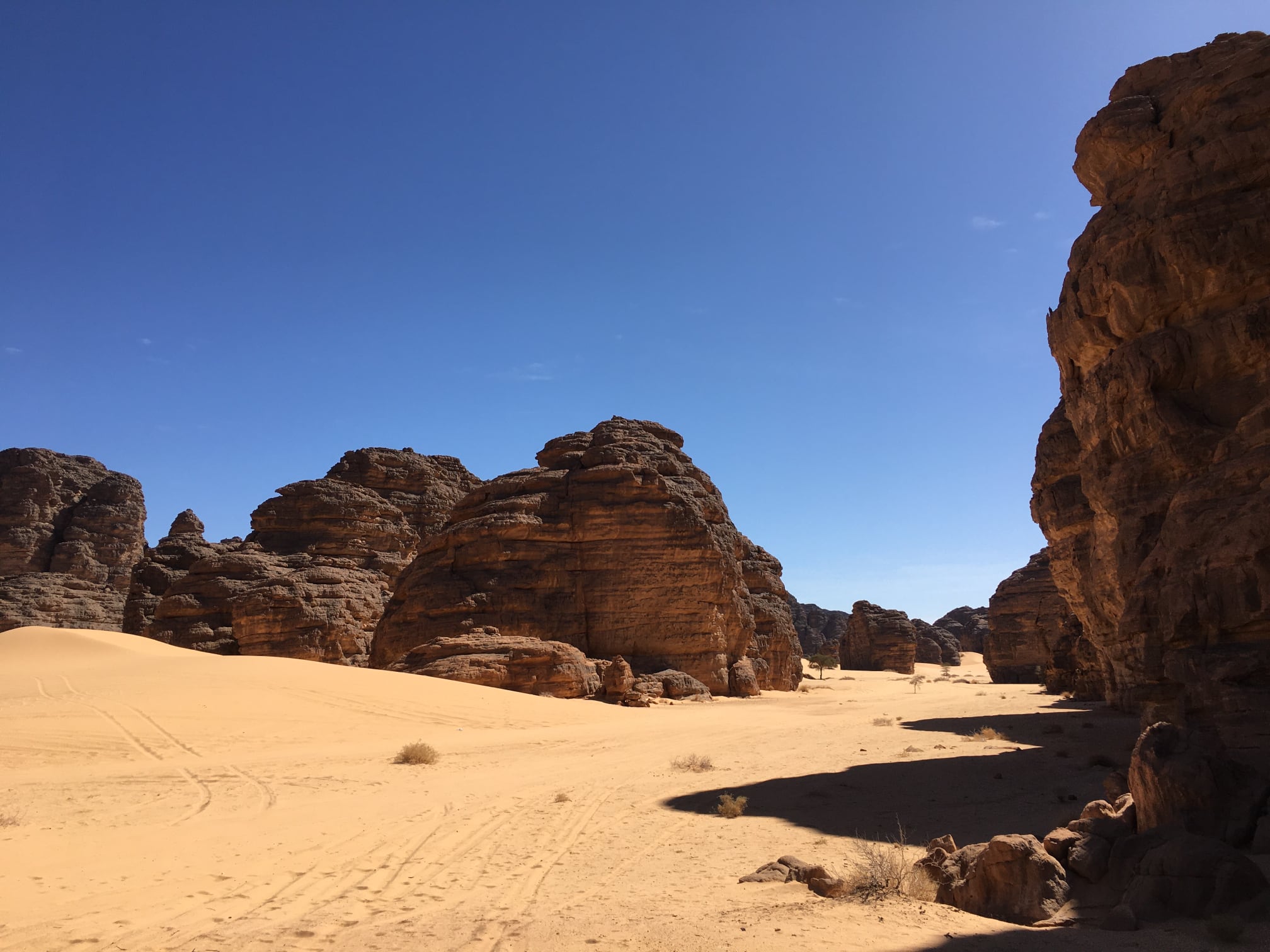
This territory forms a vast natural labyrinth where dunes, rocks and sculpted reliefs intertwine.
A Moving Landscape
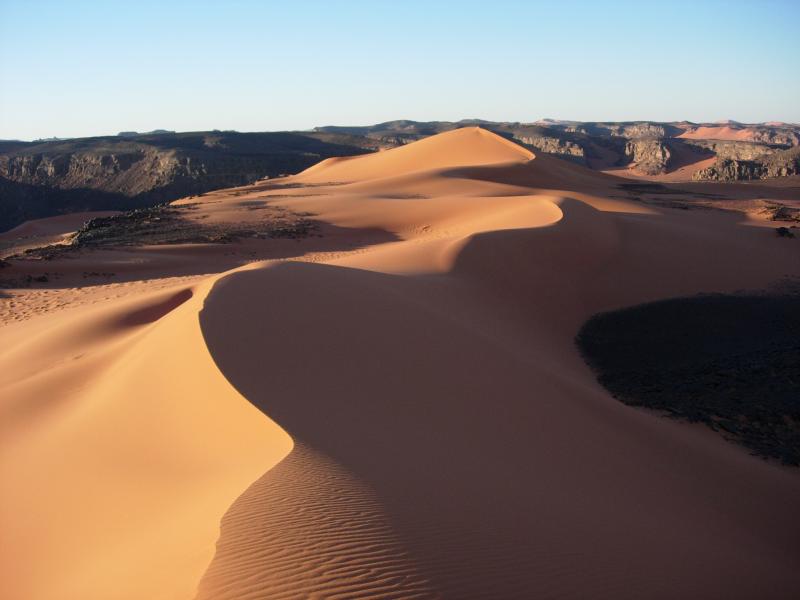
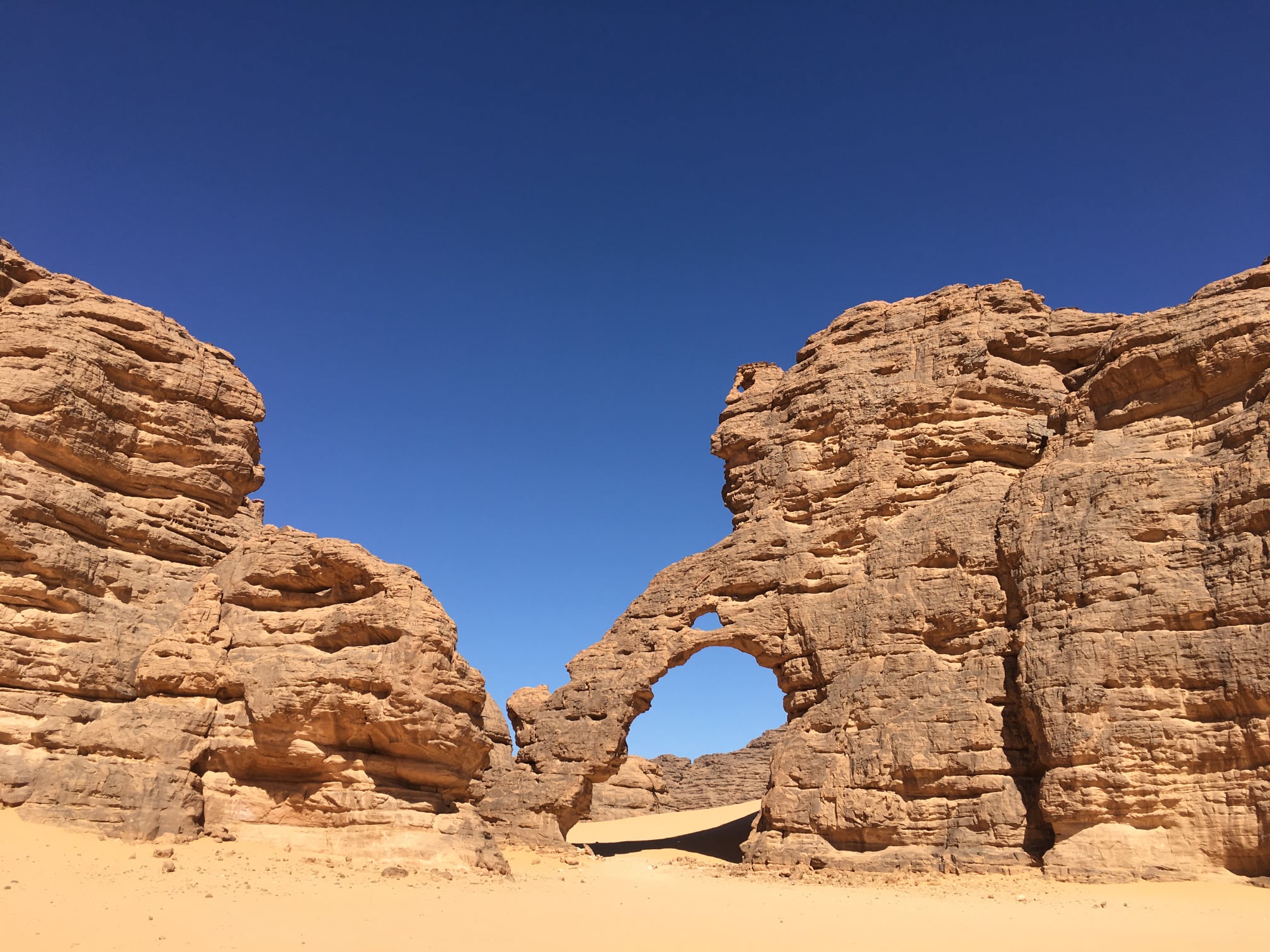
The red and orange dunes constantly change with the light. Natural arches, rocky pinnacles and sandstone formations create a living landscape continuously shaped by the wind.
A Land of History
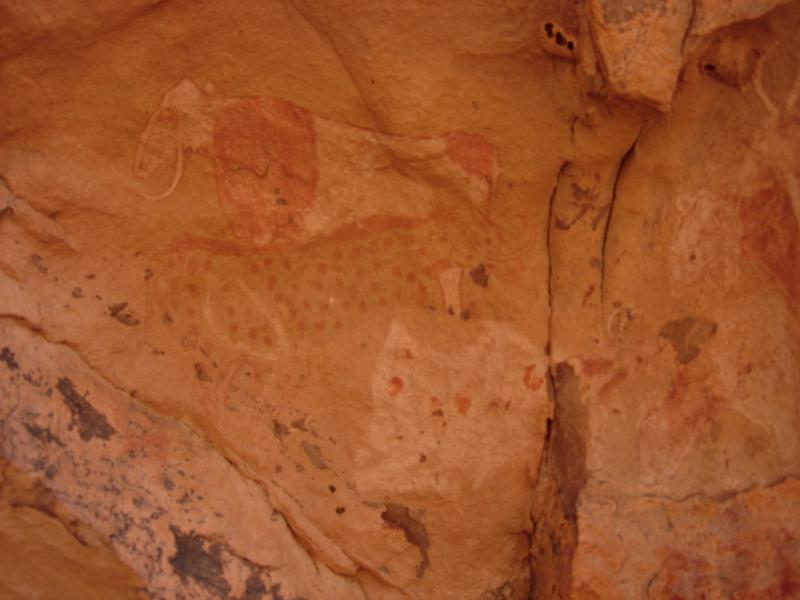
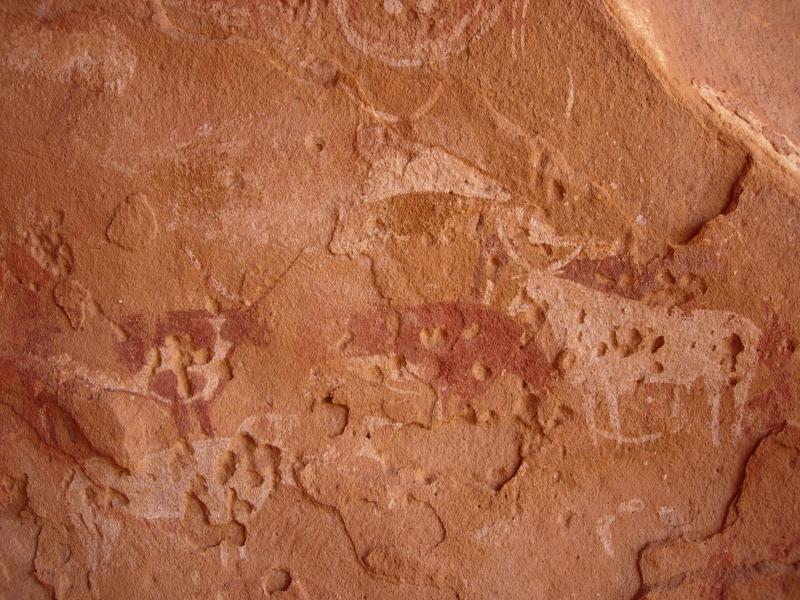
The Tadrart is also a major site of prehistoric rock art. On the rock walls, prehistoric peoples left traces of their passage, engraved and painted with ochre, bearing witness to thousands of years of human presence.
WEST
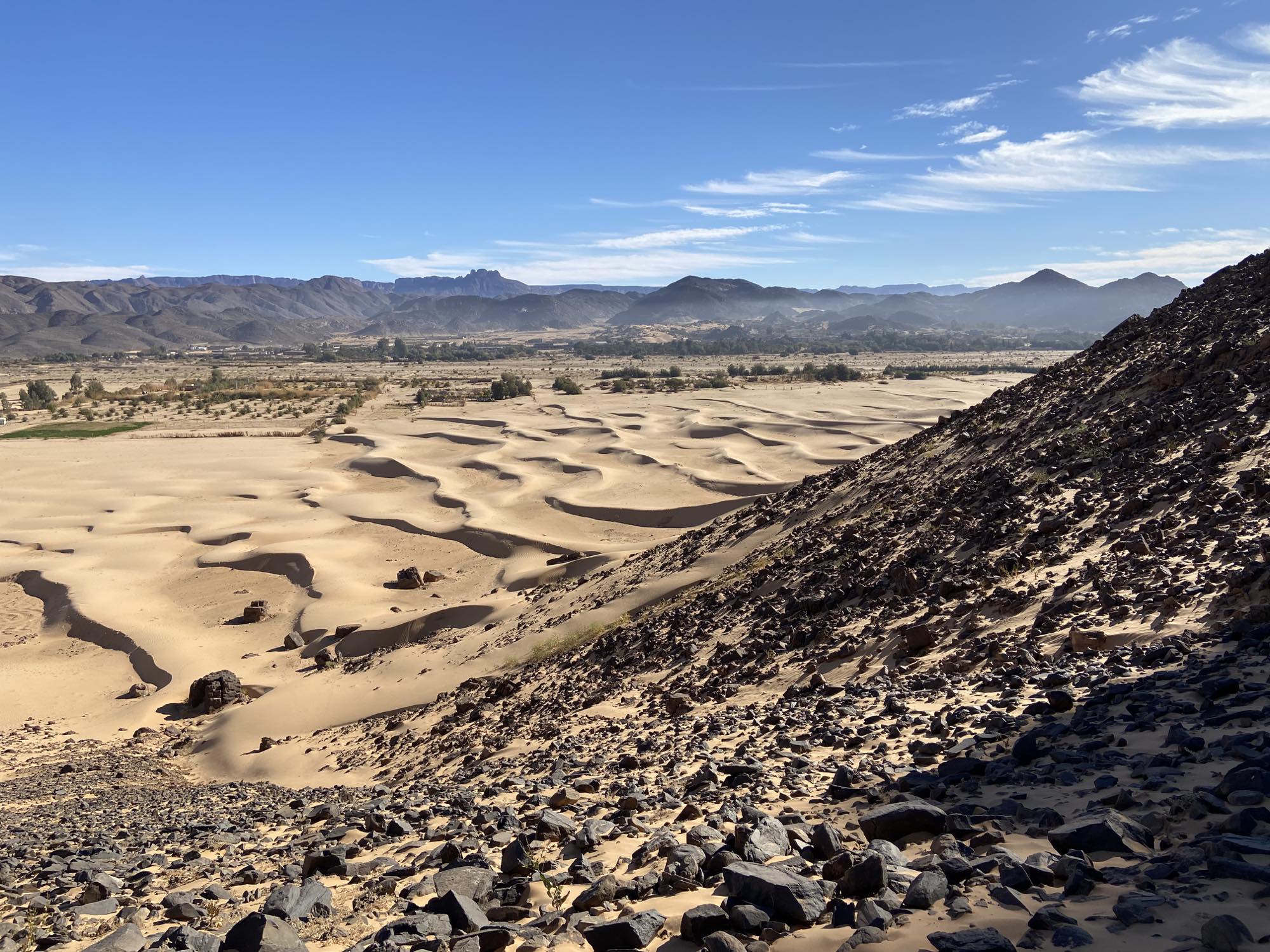
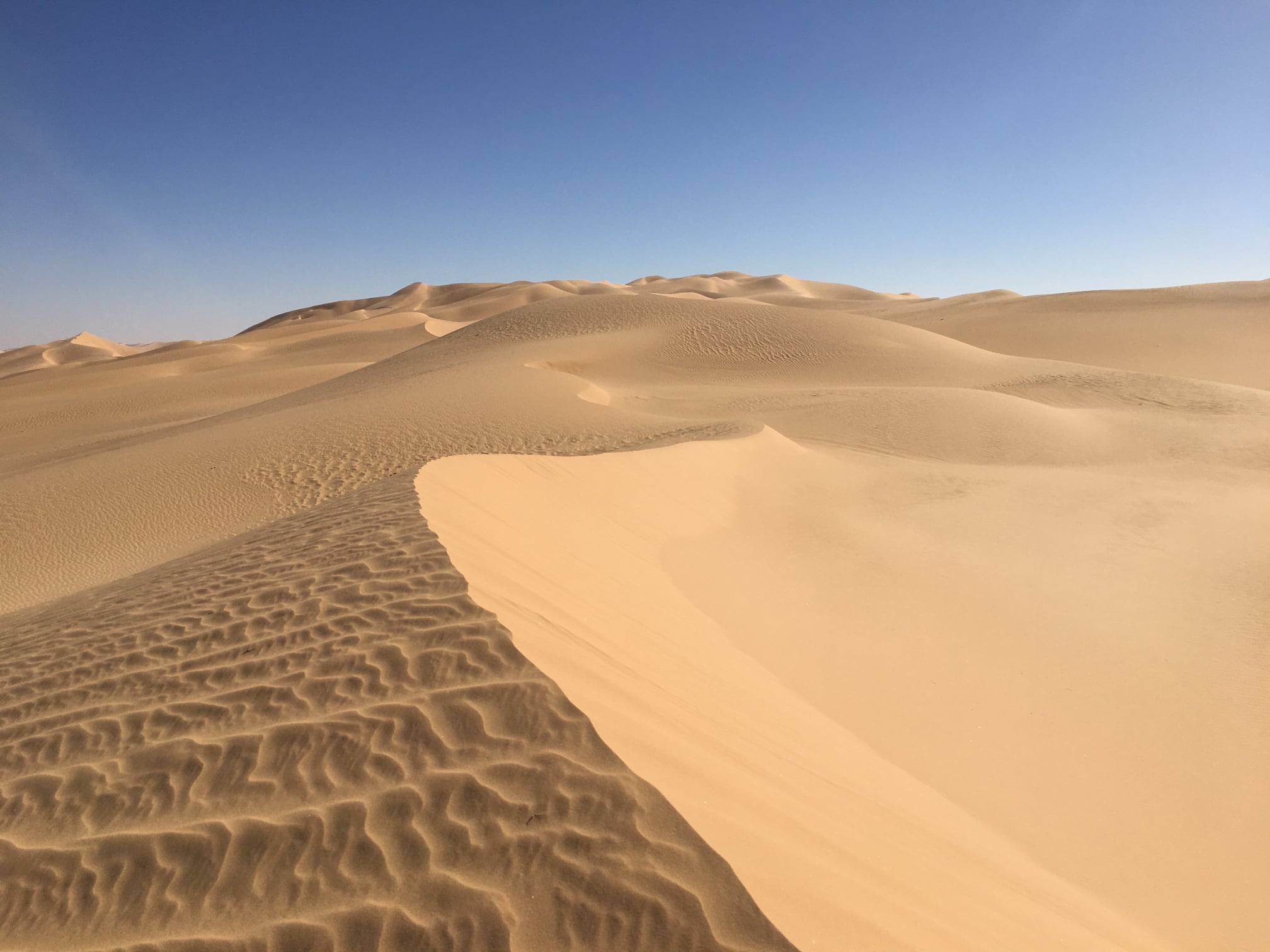
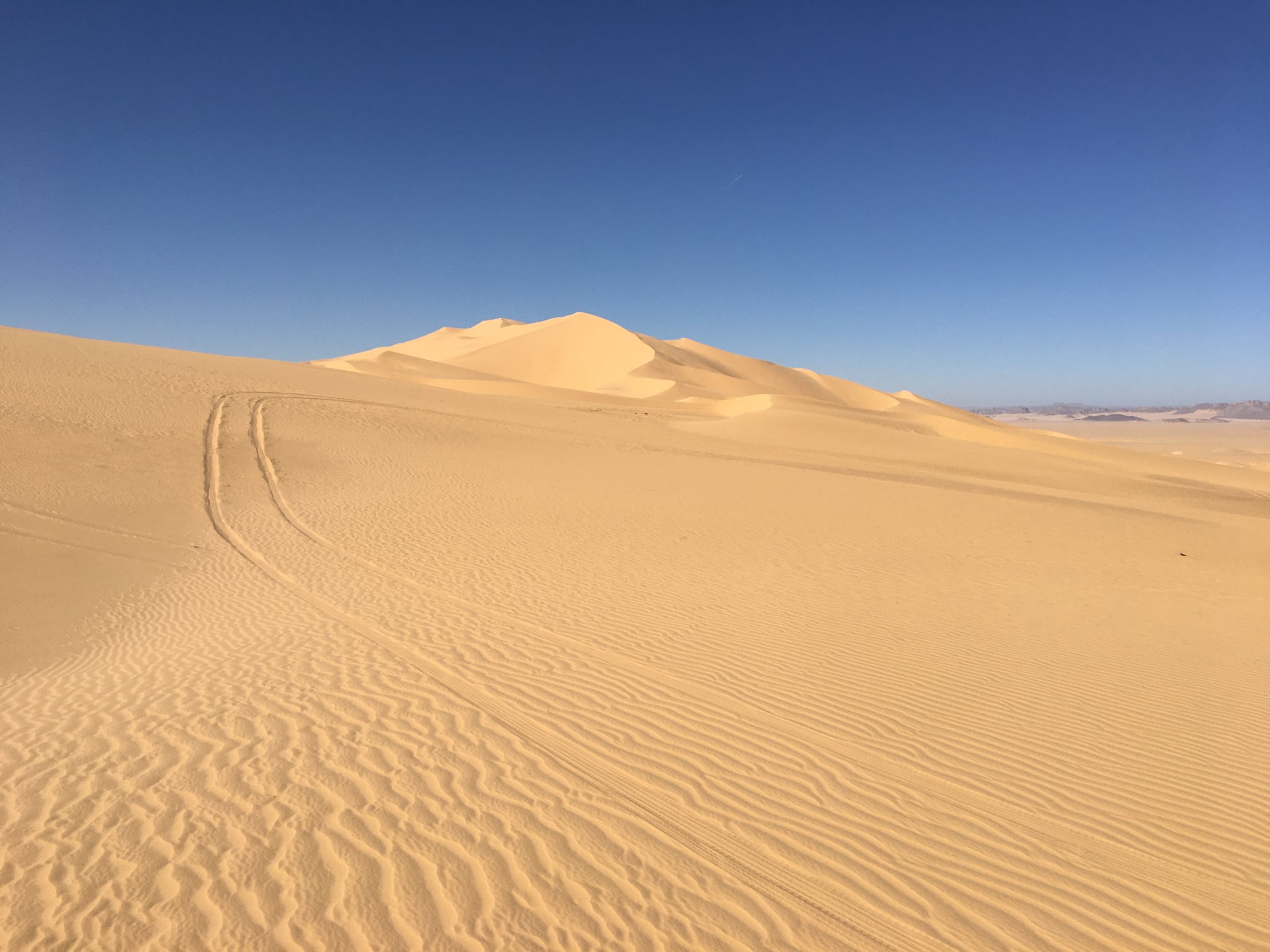
The Erg Admer, Sea of Dunes
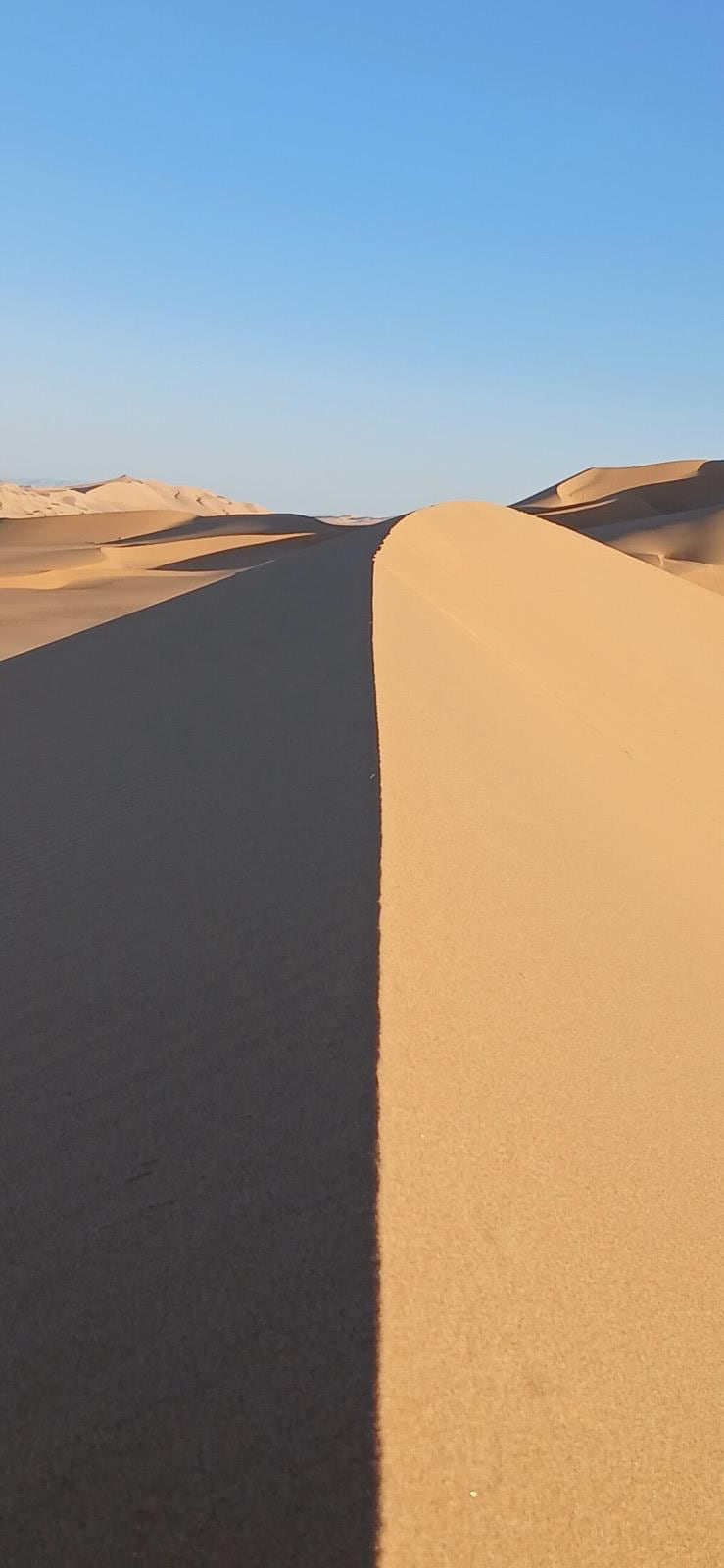
A vast expanse of fine sand stretching 100 km long and 20 km wide.
It begins in the center of the Tassili n’Ajjer near Essendilene and extends southward toward the Ténéré at the Niger border.
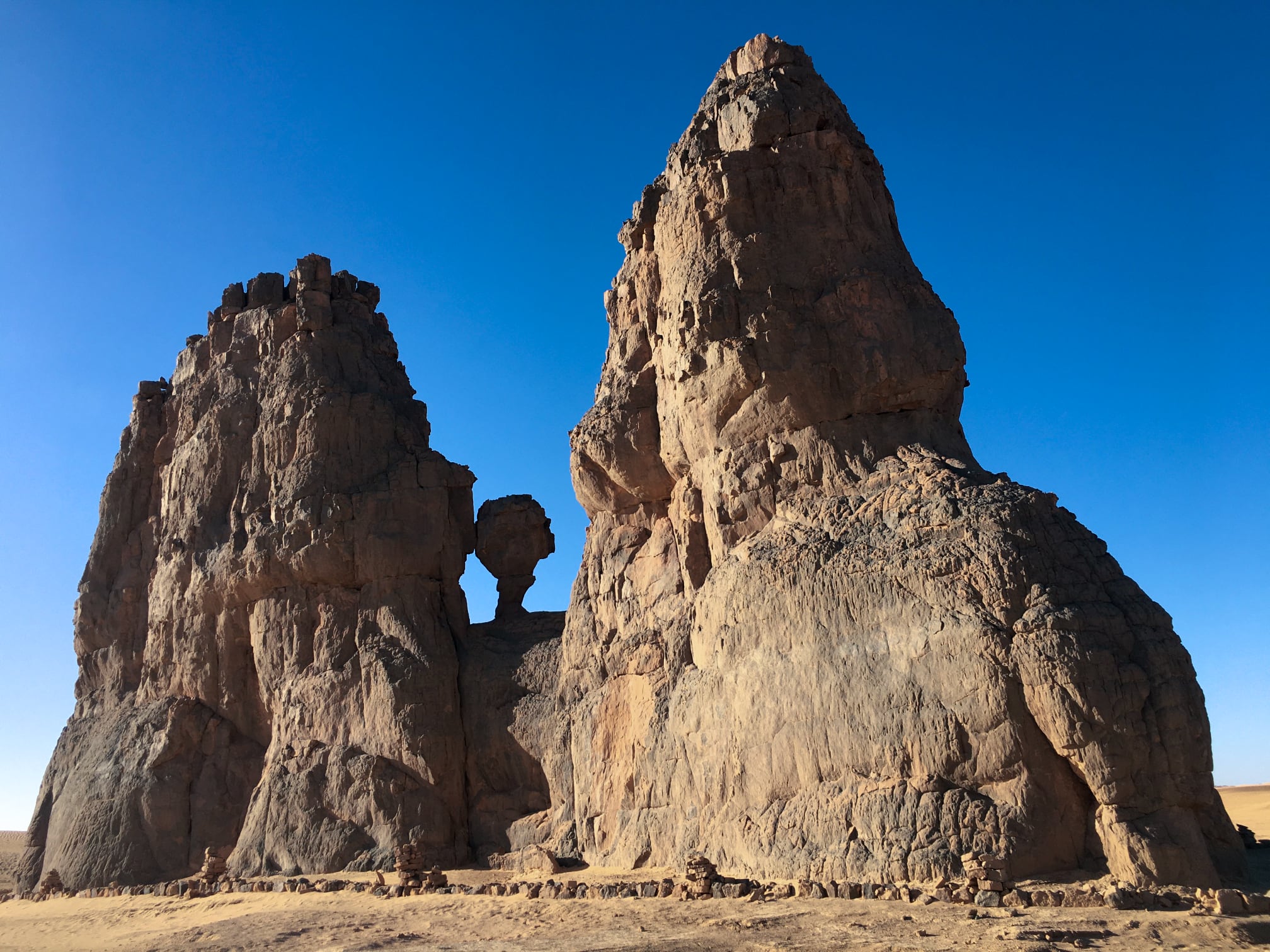
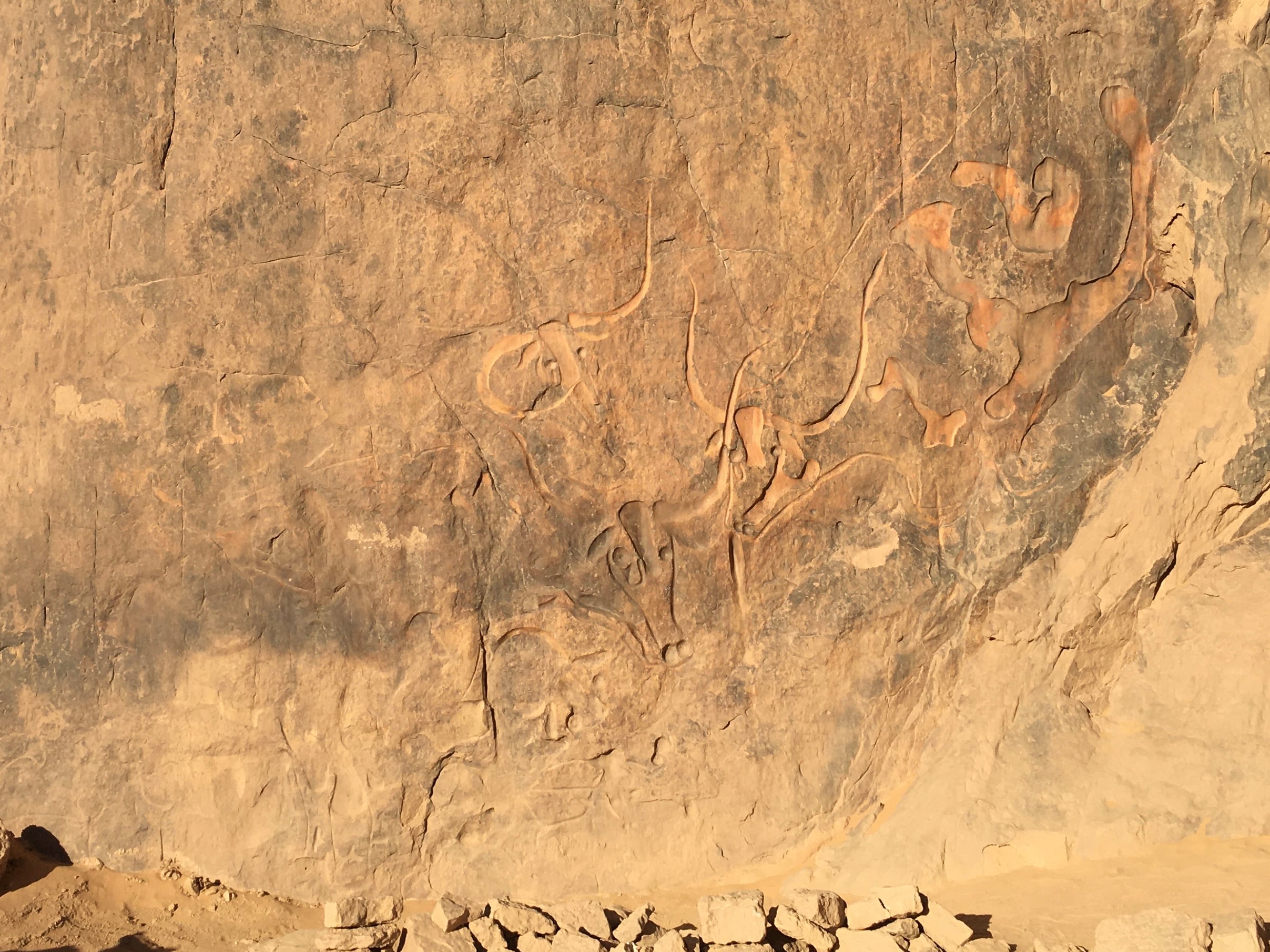
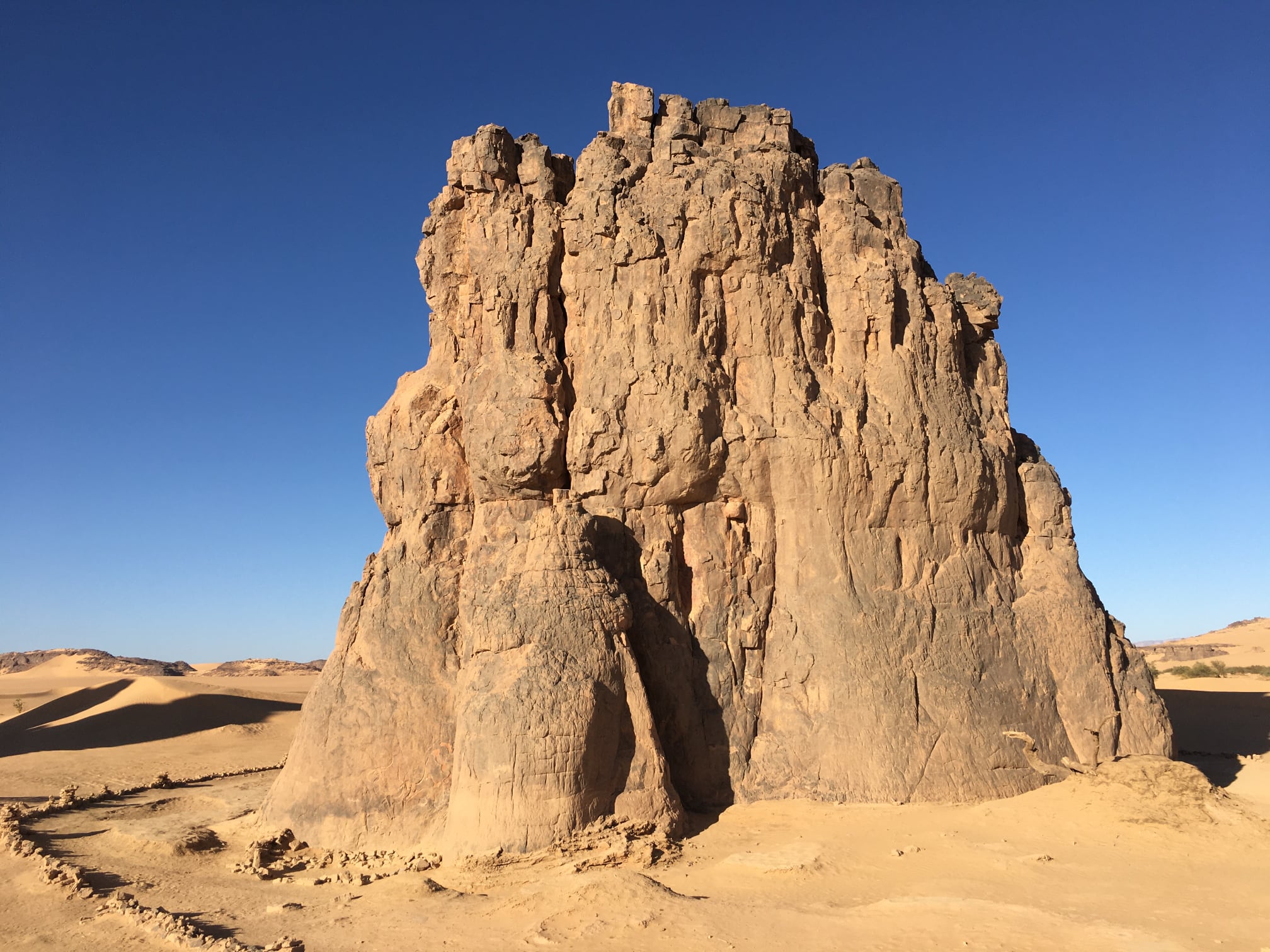
The famous Tagharghart rock, home to the engraving known as “The Weeping Cow,” stands at the edge of these impressive white dunes near the airport.
NORTH
Towards the Oasis of Iherir
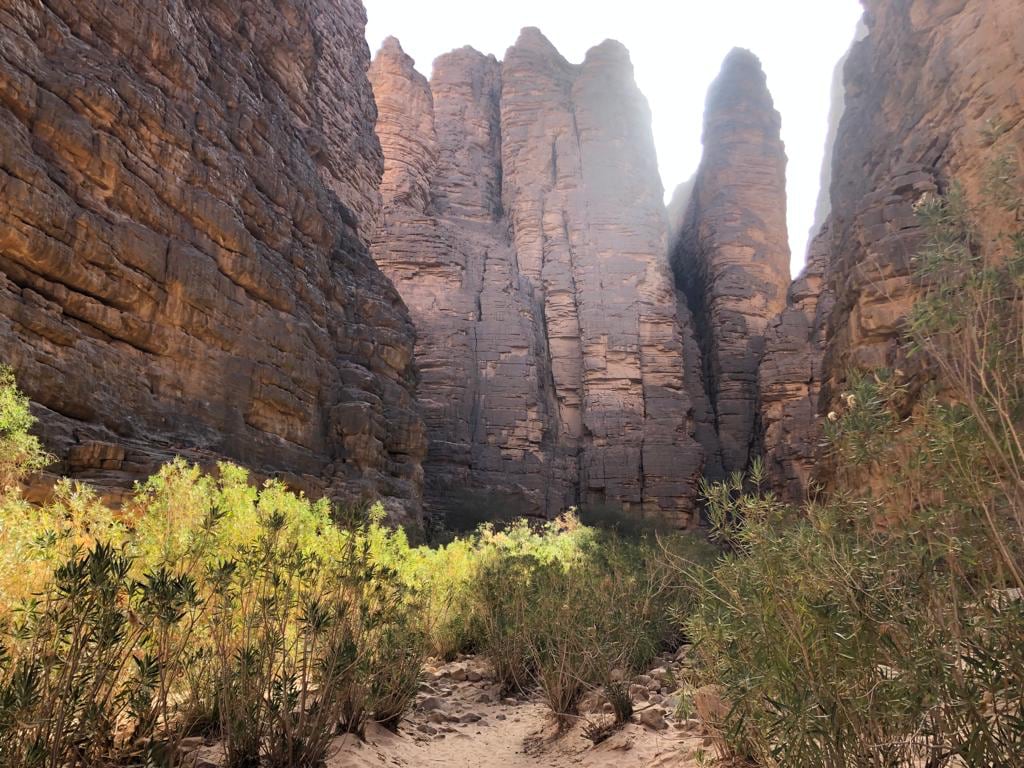
From Djanet, you travel through the wild and rugged landscapes of Timghas and Tiharamiwen, the natural arches of Tikoubaouine, the rock paintings of Tilalen and the guelta of Essendilene nestled between high cliffs. You will also cross the mining town of Bordj El Haouas, the engraved slab of Tin Taghirt in the Dider valley and the austere reg of the Tassili before reaching the oasis of Iherir.
Its zéribas — small stone houses with reed roofs — inspired the traditional huts of our garden.
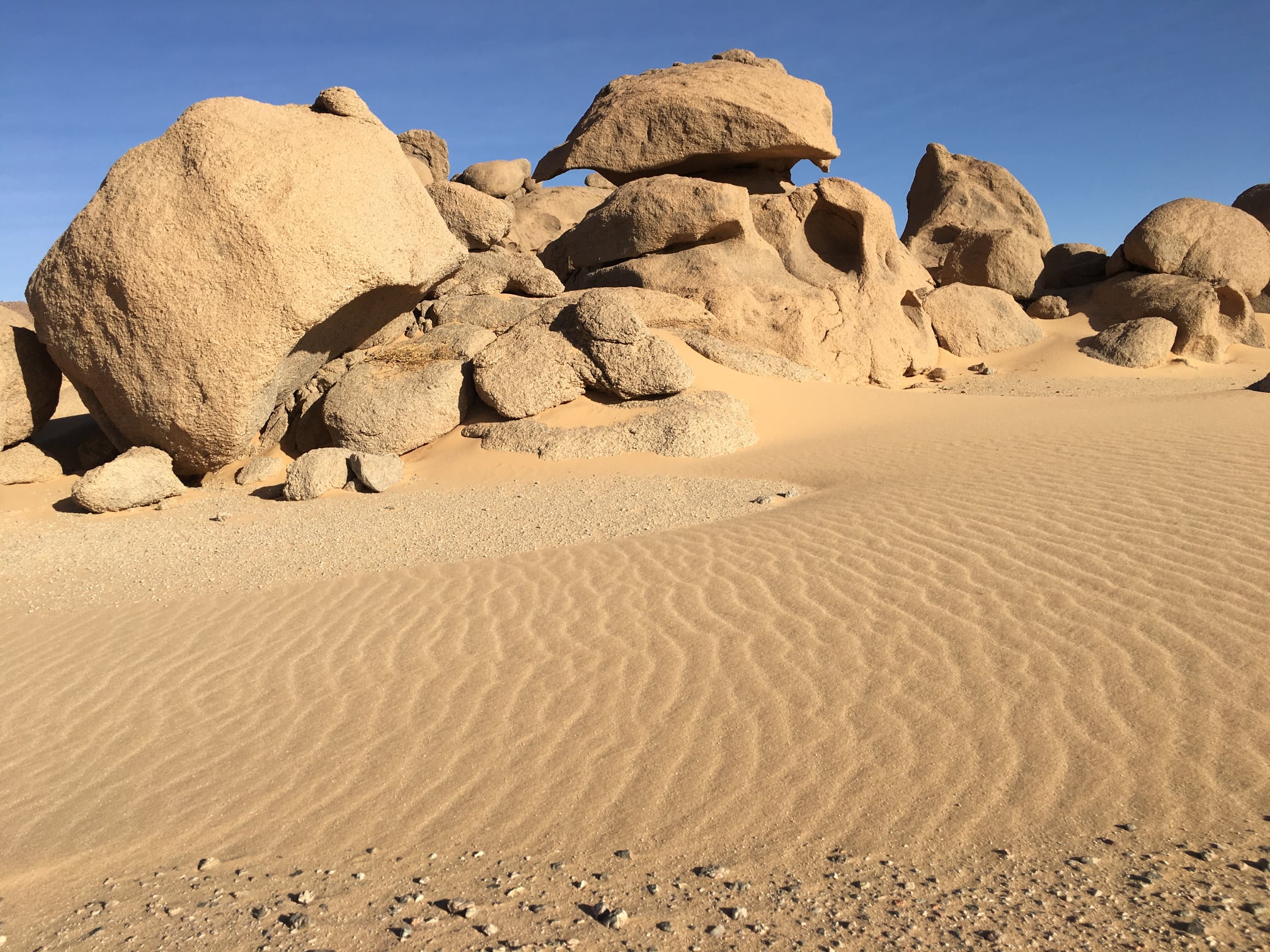
A Desert with a Thousand Faces
North
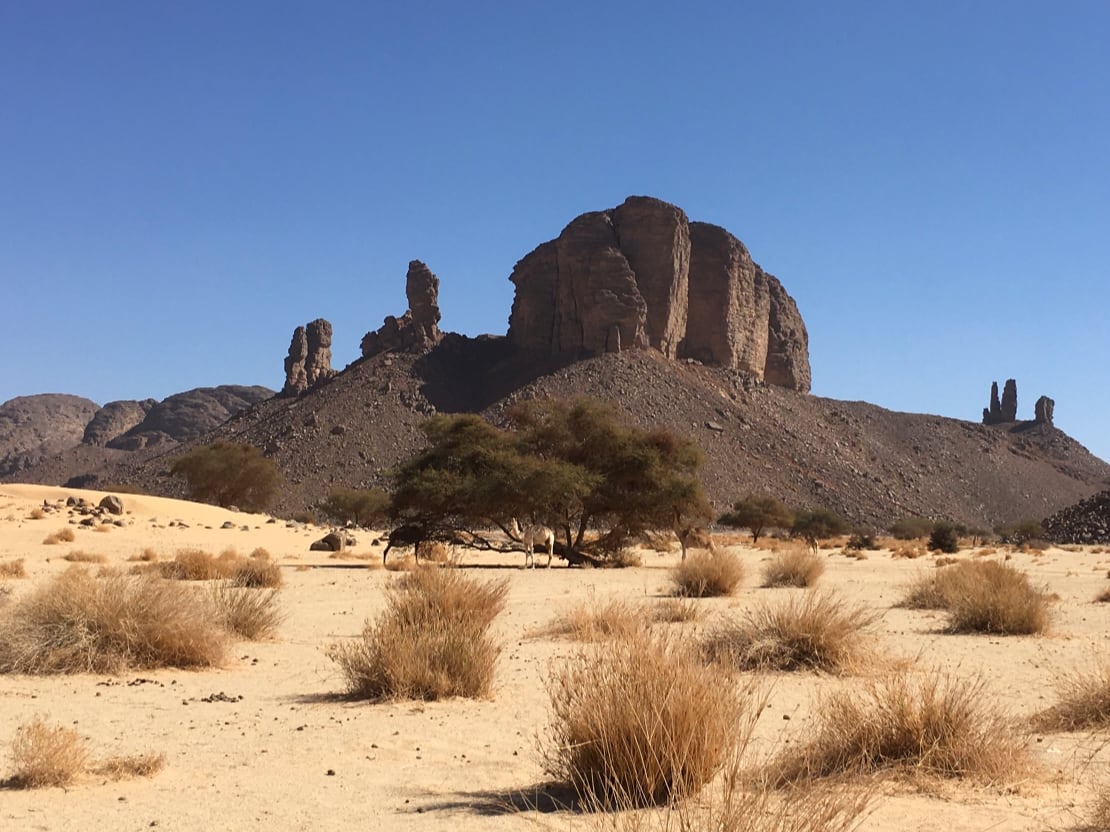
A fragile balance between oasis life and the harshness of ancient rocks. The imprint of humanity and nature living in harmony.
South
The pure spectacle of dunes and reliefs. A desert of fire glowing at every sunset, offering landscapes from another world.
East
The ultimate experience of immensity and absolute silence. An invitation to contemplation in the middle of vast mineral plains.
West
The Erg Admer unfolds like a sea of golden dunes sculpted by wind and light. A soft and moving landscape, ideal for experiencing the silence and immensity of the Sahara.
Ready to Discover Djanet?
Join us for a timeless adventure.Our local guides will open the doors to the Sahara’s best-kept secrets.