
Tuareg Culture
In the heart of the Sahara, every trek is also an encounter: with a people, a language, traditions passed down from generation to generation, and a way of life shaped by the desert.
TOTAL IMMERSION
An Immersion Beyond the Landscapes
Travelling to Djanet means discovering far more than landscapes.
It means entering a world of sharing, silence, traditions and memory.
In the Tassili n’Ajjer, prehistoric paintings and engravings bear witness to a very ancient human presence, while Tuareg culture continues to keep alive a strong connection with the desert, hospitality, music and oral tradition.
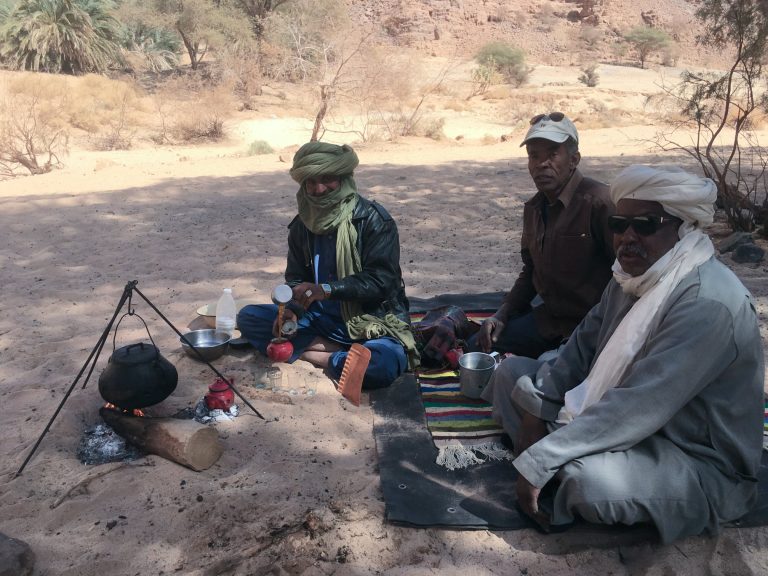
Hospitality
Among the Tuareg people, hospitality is an essential value deeply rooted in desert culture. Visitors are always welcomed with respect and generosity, often around tea, a symbol of sharing and conviviality.
A sincere hospitality, where every encounter becomes a special moment.
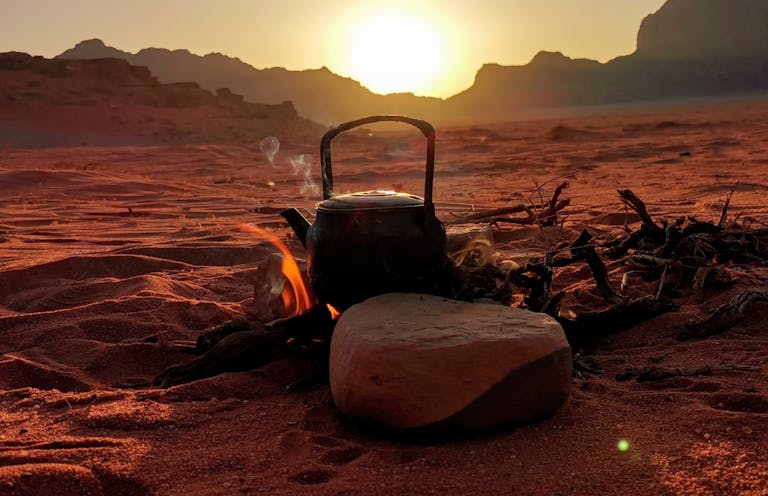
The Tassili, Land of Memory
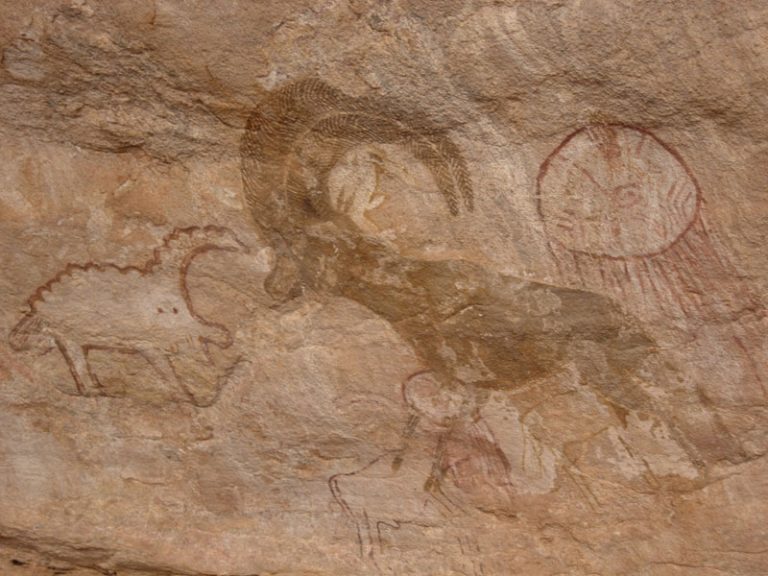
The Tassili n’Ajjer is home to one of the world’s most remarkable collections of prehistoric rock art.
Its paintings and engravings tell thousands of years of human history in the heart of the Sahara.
Tifinagh
Tifinagh is the traditional script associated with Berber languages, still deeply linked to Amazigh and Tuareg identity.
Its symbols, both simple and meaningful, can be found in many aspects of daily life. They reflect an ancient culture that remains alive today, where writing itself becomes a form of expression and identity.
A discreet writing system, yet one filled with history and meaning.

Music and Transmission
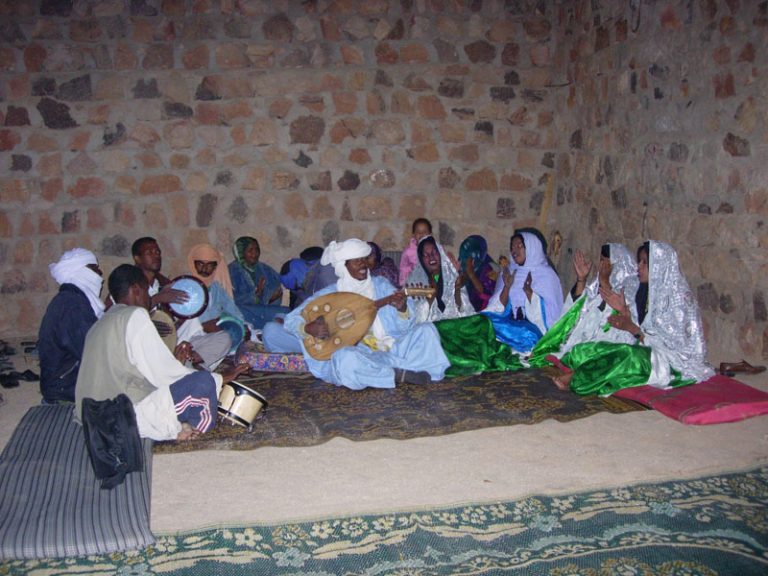
The imzad (a one-string fiddle) and the tendé (a small drum, formerly a mortar covered with goat skin) are still played by women singing traditional songs.
Since the 1970s and 1980s, Tuareg youth have also expressed themselves through guitar-based protest music inspired by rock and blues, notably with groups such as Tinariwen, Bombino, Imidiwan and Tissilawen.
Born in Djanet, Othmane Bali was one of the great poets of the Kel Ajjer Tuareg and a true virtuoso of the oud (lute). His son Nabil Bali continues his legacy. Together, they contributed to the international recognition of Tuareg music.
Small Tuareg Lexicon
|
Madyafou |
Hello |
|
Maydjan |
How are you? |
|
Alkher |
Fine |
|
Ayouh |
Yes |
|
Kayla |
No |
|
Ahah Yaknan |
Have a good day |
|
Tadagat Nalkher |
Good evening |
|
Ar Toufat |
See you tomorrow |
|
Ar Saghat |
Goodbye |
|
Tanimert |
Thank you |
|
Asarouf |
Excuse me |
|
Nigla |
Let’s go |
|
Houlan |
A lot |
|
Soulan |
Slowly |
|
Asekal |
Journey |
|
Tamanjout |
Cheche (traditional scarf) |
|
Alas |
Man |
|
Touadaemt |
Woman |
|
Anoubi |
Child |
|
Temse |
Fire |
|
Chay |
Tea |
|
Akh |
Milk |
|
Tadjala |
Bread |
|
Tesamt |
Salt |
|
Aman |
Water |
LOCAL CRAFTSMANSHIP
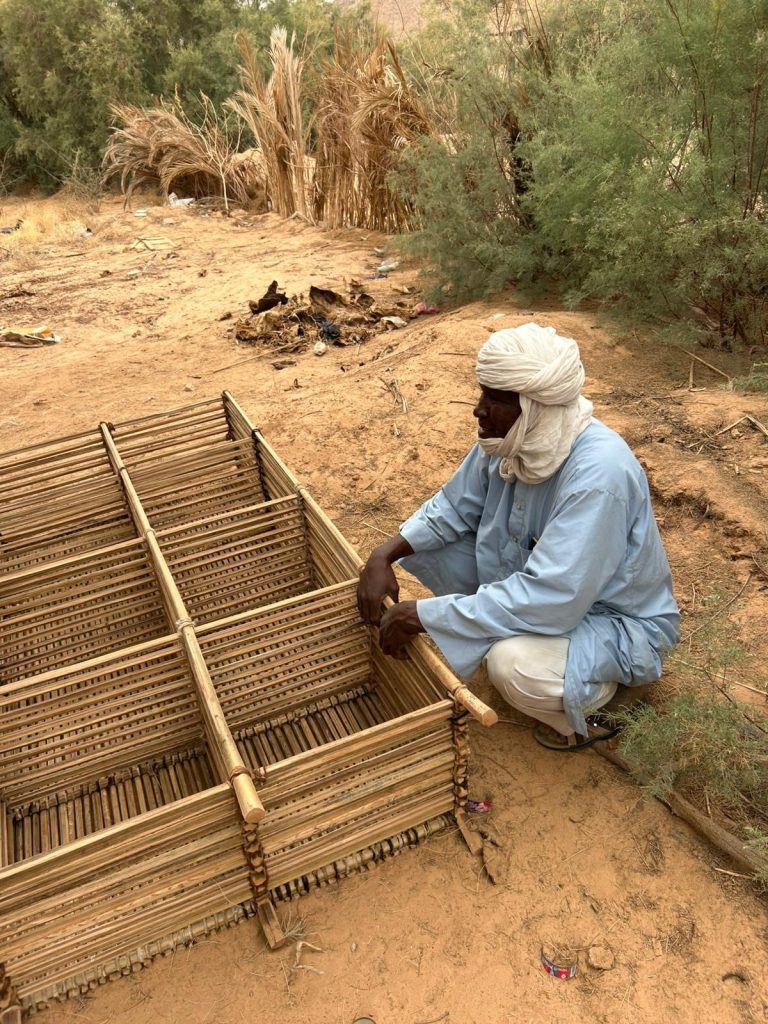
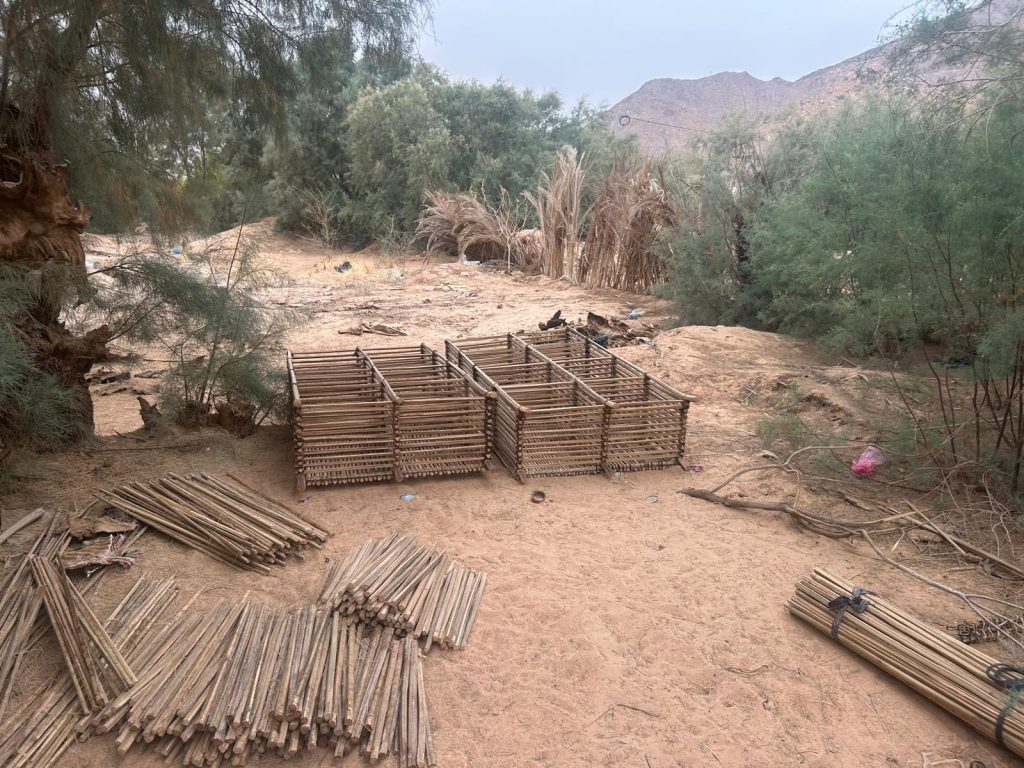
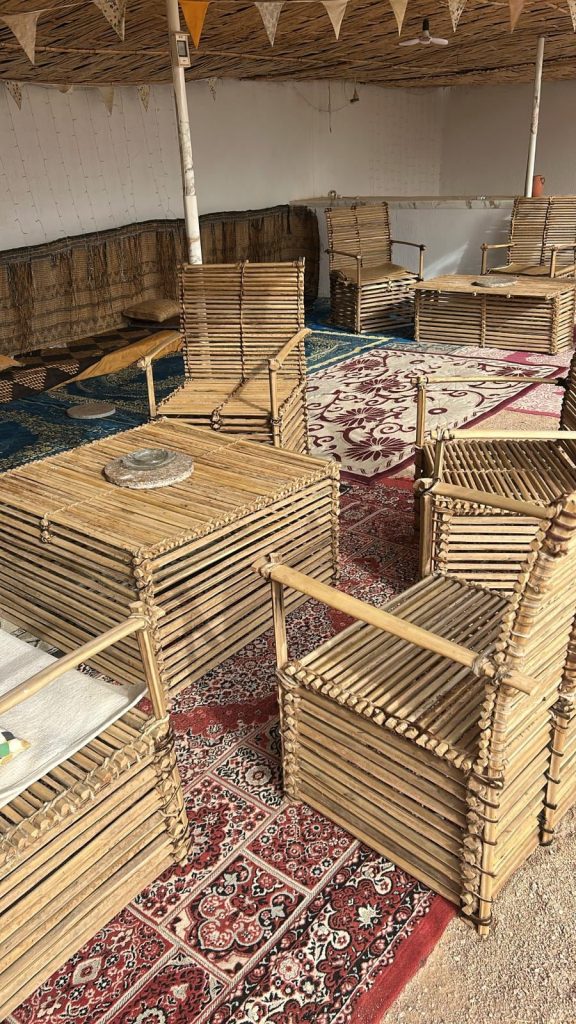
Djibril’s Craftsmanship
Djibril is a local craftsman who created several pieces of our traditional furniture using palm ribs bound with camel or cow leather straps.
Ready to Experience the Desert?
Discovering the Sahara also means taking the time to understand those who live there and those who crossed it long before us.Our treks are designed as an immersion into the landscapes of the Tassili n’Ajjer, but also into the living culture that gives them their full meaning.